My research starts with a mechanics question: how a material deforms, how its properties can be identified, or whether a model predicts what an experiment actually measures. Full-field imaging, finite element simulation, inverse methods, and machine learning are the tools I use to answer it.
Material Mechanics & Model Validation
-
Heterogeneous Material Property Identification
An inverse mechanics framework that identifies property fields from a single instrumented test while using measured boundary conditions.
-
Thermo-Mechanical Package Modeling & Validation
Abaqus modeling and parametric studies linking CTE mismatch, geometry, warpage, interfacial stress, and measured package response.
Experimental Material Characterization
-
High-Strain-Rate Material Characterization
Cavitation experiments and full-field imaging reveal material response, instability, and damage under rapid, repeated loading.
-
Bubble-Radius-Fitting
Quantitative bubble-dynamics measurement from ultra-high-speed cavitation sequences with difficult optical backgrounds.

Full-Field Deformation Measurement
-
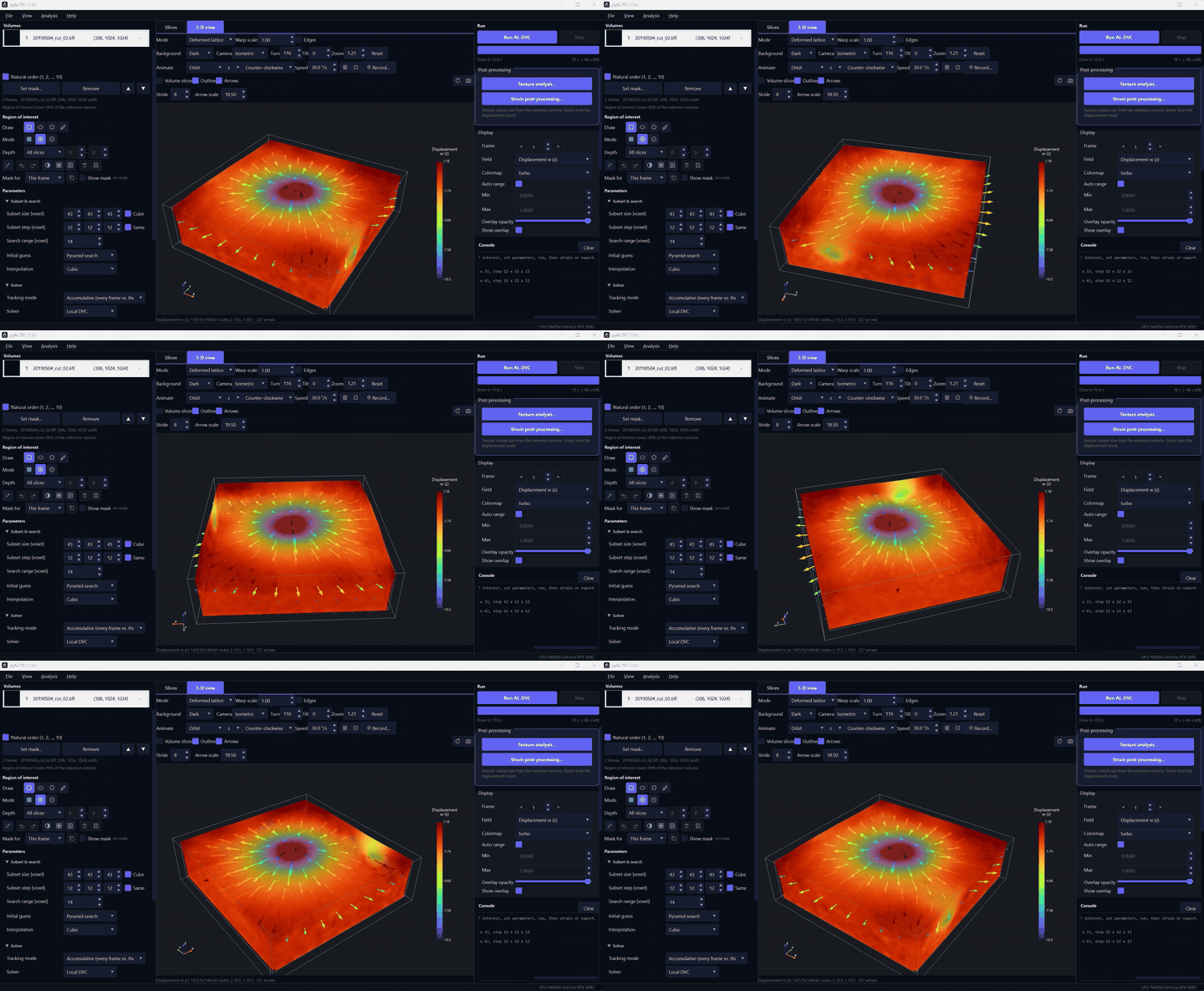
pyALDIC-3D
Experimental 3D surface kinematics for specimens undergoing out-of-plane motion, large strain, and discontinuity.
-
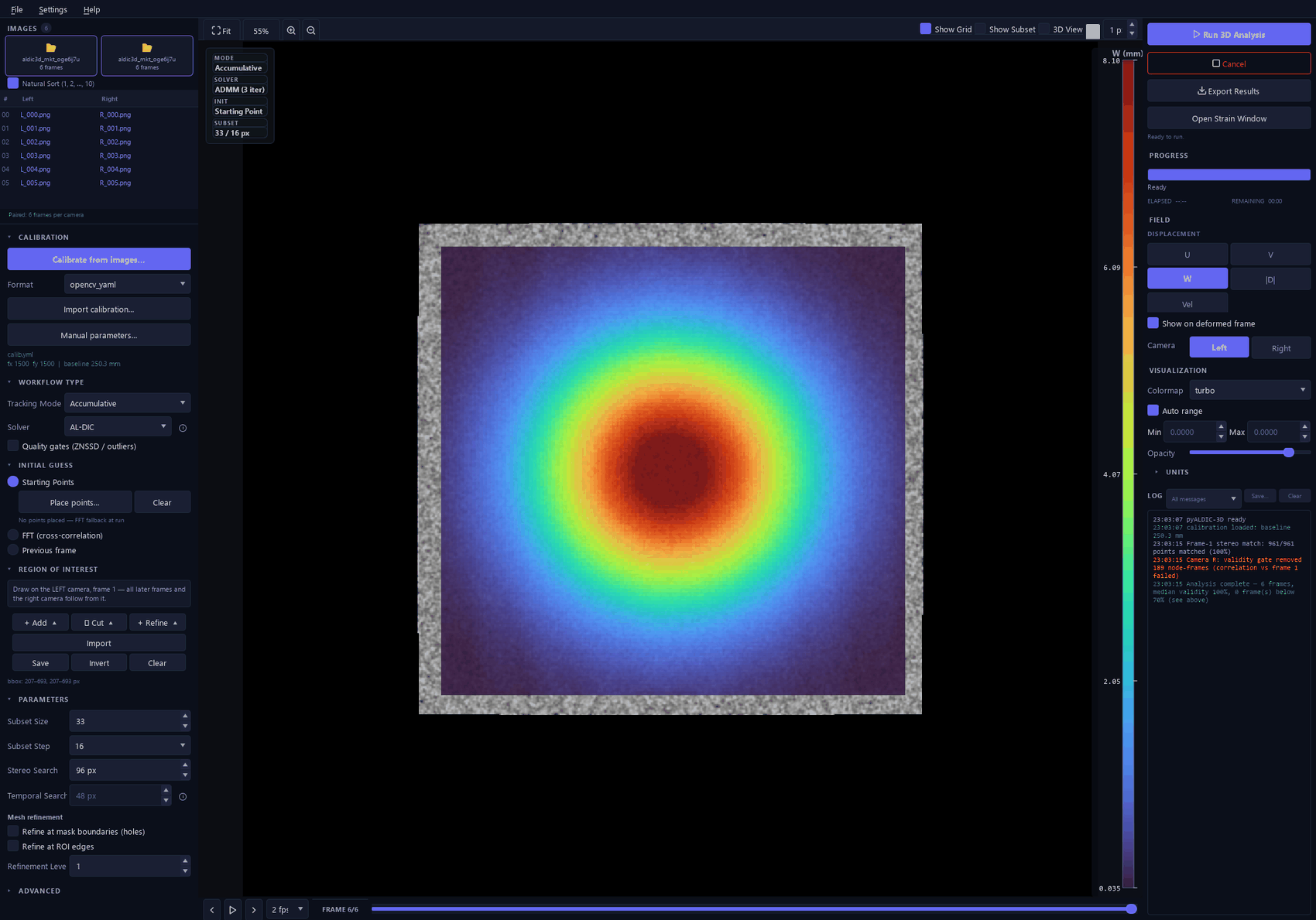
3D-Stereo-ALDIC
Full-field 3D deformation measurement for model validation on biological tissue and architected-material specimens.


Learning-Accelerated Metrology
-
DIC-ROI-Mask-Generator
Spatial adaptation that keeps full-field strain measurement inside valid material regions near complex boundaries.

